Petra Ludwig · 2 September 2026
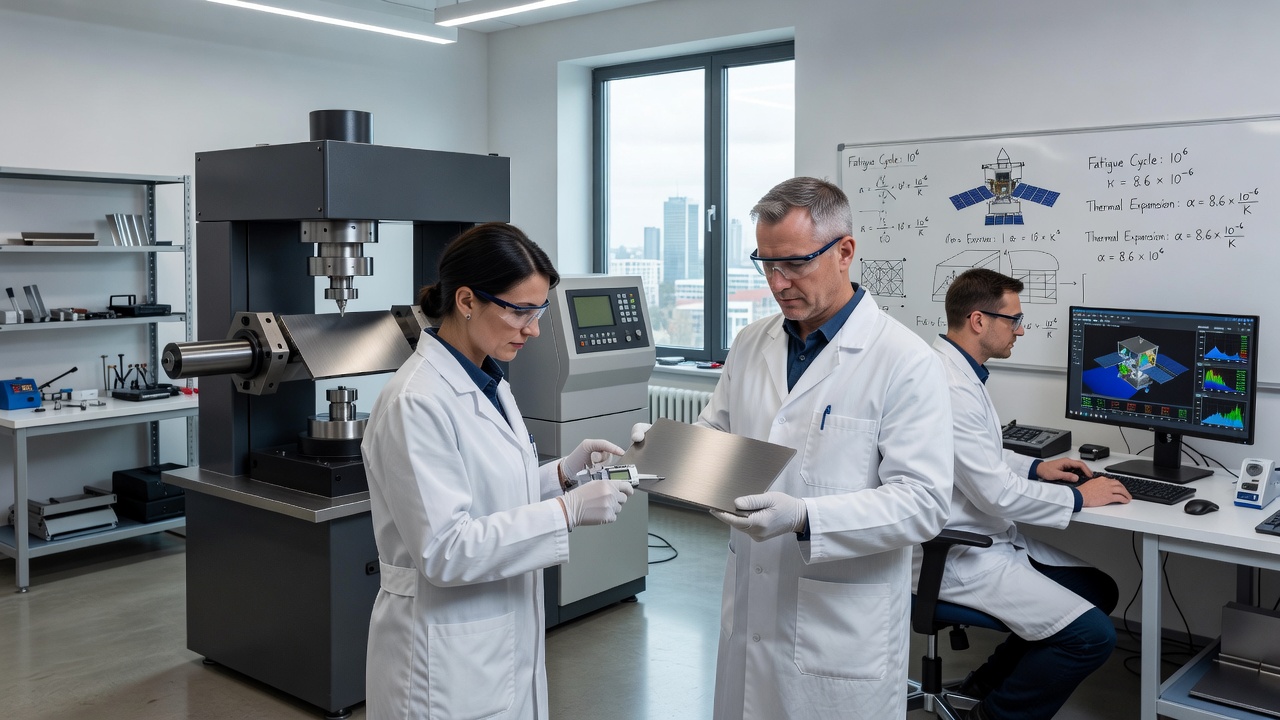
The Institute for Advanced Materials in Warsaw has begun rigorous testing of a novel titanium alloy intended for satellite frame construction. Developed through orbital forging techniques, the material aims to deliver enhanced strength-to-weight ratios while maintaining durability in extreme orbital environments. Researchers emphasize its potential to reduce launch costs by minimizing structural mass without compromising integrity.
Experimental Procedures and Initial Findings
Testing protocols include tensile strength evaluations, fatigue resistance under cyclic loading, and thermal stability assessments across temperature ranges from minus 150 to plus 200 degrees Celsius. Samples forged at the institute's specialized facility underwent microstructural analysis using electron microscopy to verify grain refinement achieved through controlled deformation processes. Early results indicate a 15 percent improvement in yield strength compared to conventional Ti-6Al-4V alloys, attributed to optimized forging parameters that align crystal orientations for better load distribution. Collaboration with the Polish Space Agency ensures test conditions replicate low-Earth orbit radiation exposure and vacuum effects. Educational modules at orbitforge.edu.pl incorporate these findings to train engineers in advanced forging simulation software.
Additional trials focus on weldability and corrosion resistance against atomic oxygen, common in orbital altitudes. Data collected will inform iterative alloy refinements, with preliminary reports noting consistent performance across multiple batches. The project aligns with broader European initiatives to standardize lightweight materials for small satellite platforms.
Implications for Satellite Design and Education
Successful validation could enable lighter satellite buses, allowing increased payload capacity for scientific instruments or communication systems. Industry partners have expressed interest in scaling production once certification milestones are met. The institute plans to publish detailed datasets for open research, supporting curriculum development in orbital forging principles. Students at affiliated programs gain hands-on experience through virtual labs modeling the alloy's behavior during high-pressure forming. Long-term goals include integration into upcoming Polish microsatellite missions scheduled for 2026. This work underscores the role of specialized education in advancing aerospace materials science, fostering innovations that address both performance and sustainability challenges in space infrastructure.