Petra Ludwig · 23 October 2026
Simulator-Based Education Transforms Heat Shield Approaches in Crewed Space Programs
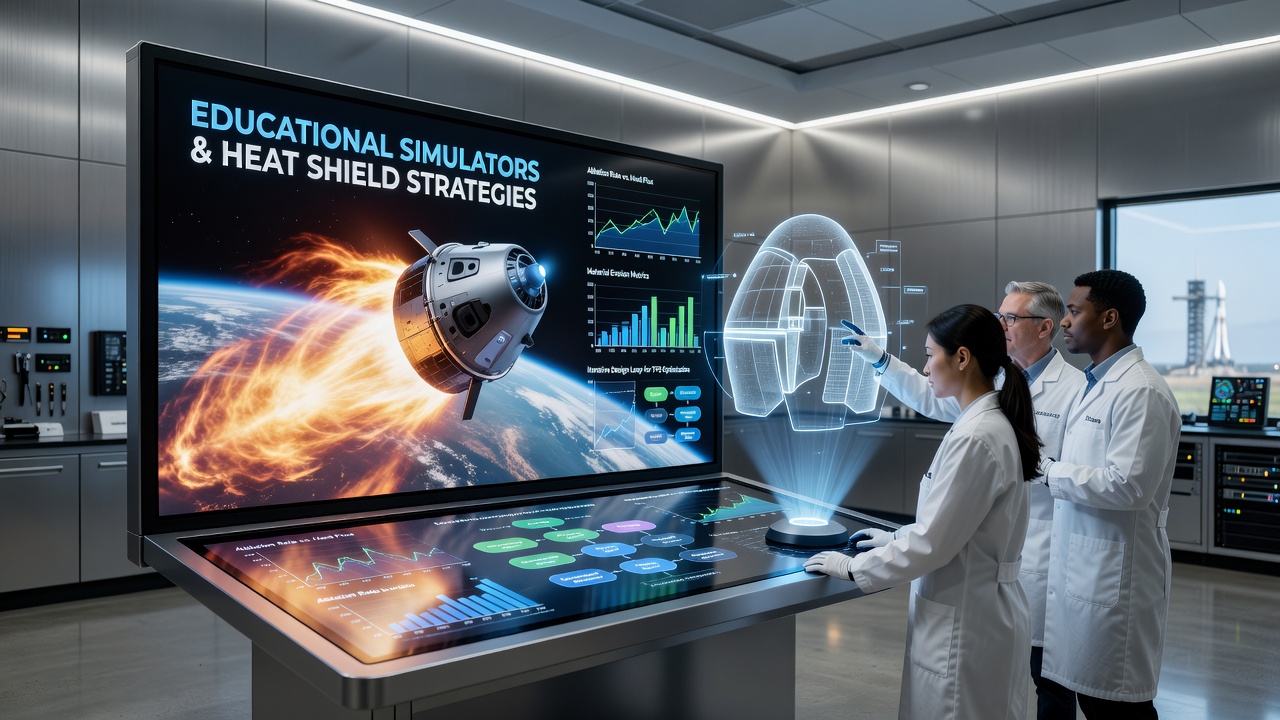
University programs around the world integrate high-fidelity simulators into aerospace curricula, and these tools allow students plus researchers to model extreme thermal environments during atmospheric re-entry while they refine material selections and structural configurations for heat shields. Data from multiple institutions show that repeated simulation cycles help teams identify failure points in candidate materials long before any hardware reaches a launch pad, and this iterative process accelerates design decisions across programs focused on vehicles like Orion and future lunar return missions.
Core Mechanisms Behind Simulator Integration
Educational platforms replicate plasma flows, radiative heating rates, and mechanical stresses that peak during velocities exceeding 11 kilometers per second, while users adjust parameters such as ablation rates and insulation thickness in real time. Research indicates that coupling these models with finite-element analysis packages produces datasets comparable to those gathered from arc-jet facilities, and institutions report that students who master these environments contribute directly to prototype evaluations funded by space agencies. In October 2026 several European and North American universities schedule coordinated simulation events that feed results into shared databases maintained by international partners, and observers note the timing aligns with upcoming Artemis program milestones.
Material Selection and Performance Data
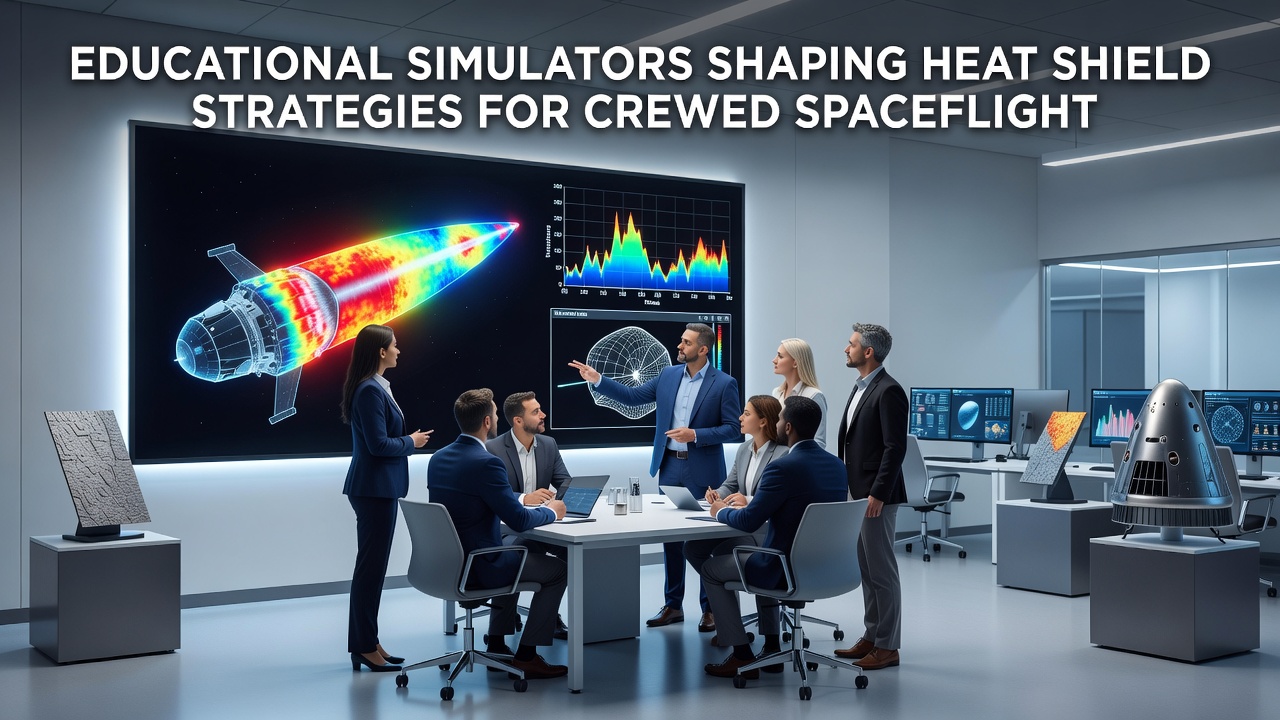
Teams working with phenolic-impregnated carbon ablators and advanced ceramic matrix composites rely on simulator outputs to predict recession depths under varying heat flux profiles, and studies from academic labs document how small geometry tweaks can reduce mass by measurable percentages without compromising safety margins. Figures released by participating programs reveal that virtual testing sequences often run hundreds of iterations in the time required for a single physical test, which allows rapid exploration of edge cases such as off-nominal entry angles or prolonged exposure durations. One study coordinated across multiple campuses found that incorporating student-generated scenarios into official review cycles shortened the time from concept to qualified component by several months, and similar patterns appear in reports covering both government and commercial vehicle development.
International Program Examples
Canadian and Australian research groups have incorporated simulator modules into joint courses that emphasize regional launch constraints, and their outputs feed into broader ESA and NASA documentation on thermal protection systems. According to publicly available summaries from agency collaborations, student teams identified novel layering sequences for flexible heat shield blankets that later underwent ground qualification, and those sequences now appear in reference designs for crewed Mars transit vehicles. Japanese institutions contribute parallel simulation work focused on high-enthalpy flows, while results circulate through shared academic networks that avoid duplication of effort across continents.
Training Outcomes and Industry Transfer
Graduates who complete extended simulator modules frequently transition into roles at prime contractors, and their familiarity with validated models reduces onboarding time for new heat shield projects. Industry reports compiled by research consortia list measurable improvements in first-pass yield rates when early-career engineers apply techniques honed during university simulations, and these gains compound as teams scale designs from subscale coupons to full vehicle acreage. Partnerships between academic centers and manufacturing facilities further translate simulation parameters into production tolerances, which closes the loop between classroom exercises and flight hardware.
Conclusion
Continued expansion of educational simulators supports faster iteration on heat shield architectures for crewed missions, and agencies plus universities maintain active exchanges of data that keep academic outputs aligned with operational requirements. As simulation fidelity increases through better computing resources and refined physical models, the boundary between educational exercises and flight qualification continues to narrow, and this convergence shapes development timelines across multiple spaceflight programs.